Source Foldable Neoprene Can Cooler for Cans, Drinks, and Promotions
Compare 30 foldable neoprene can cooler options from verified suppliers. These eco-friendly holders feature heat transfer printing, waterproof materials, and customizable sizes for promotional gifts, employee benefits, and wedding favors.
Key considerations
Products List


$0.40 - $1.35
Moq: 500




Comprehensive Sourcing Guide
Foldable Neoprene Can Cooler Sourcing Guide
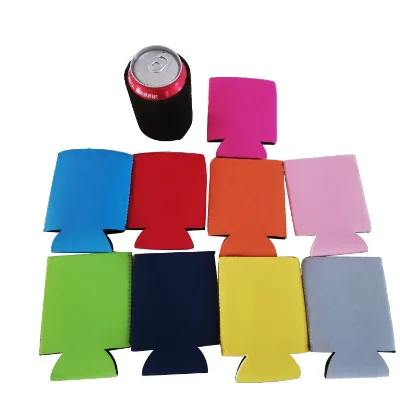
The foldable neoprene can cooler represents a versatile category of promotional and functional drinkware designed to maintain beverage temperatures while offering portability. Based on observed market data, these items are primarily constructed from neoprene, a synthetic rubber known for its thermal insulation properties and durability. The product scope encompasses various forms, including stubby holders, standard can coolers, and bottle coolers, often featuring distinct closure mechanisms such as open designs or sewing-based seals. Buyers should recognize that while the core material remains consistent, the specific application ranges from general food and drink cooling to specialized promotional gifts, employee benefits, and wedding favors.
Procurement decisions for this category must account for the variability in customization options and physical dimensions observed in current listings. Suppliers frequently offer heat transfer or silk printing for logo application, allowing brands to integrate their identity directly onto the product surface. The physical specifications vary, with common dimensions cited around 1301103mm for standard can holders, though custom sizes are available to accommodate different container types. Understanding these variations is critical for aligning the product with specific inventory needs, whether the goal is a compact, eco-friendly accessory or a larger promotional item with enhanced branding visibility.
Product Scope and Observed Listing Signals
When evaluating product listings, buyers should look for specific signals that confirm the item's functionality and intended use. The observed data indicates that these coolers are explicitly designed for cans, wine, and drinks, with a stated cold retention time of 4 to 6 hours. This performance metric is a key differentiator, suggesting that the neoprene thickness and construction quality are sufficient for short-term temperature maintenance. Additionally, the "Exo-Friendly" and "Eco-Friendly" attributes observed in listings highlight a market trend toward sustainable materials, which should be verified against the specific supplier's claims to ensure alignment with corporate sustainability goals.
The structural design of these coolers also presents distinct options that influence the final selection. Listings describe styles ranging from straight designs to magnetic closures, with some models featuring a "slap" mechanism for easy application. The waterproof nature of the neoprene material is a standard feature, ensuring that condensation from cold beverages does not damage packaging or the user's belongings. However, buyers must distinguish between non-disposable, reusable units and single-use alternatives, as the observed data confirms these products are generally non-disposable. This distinction is vital for inventory planning and for communicating the product's value proposition to end-users.
Technical Specifications to Verify
Thickness and density are the primary technical parameters that determine the insulation efficiency and tactile feel of the neoprene can cooler. Observed specifications list thickness ranges between 3mm and 5mm, with a hardness rating described as "medium soft." These attributes directly impact the product's ability to retain cold and its comfort during handling. Buyers should request physical samples to verify that the thickness is consistent across the entire unit, as variations can lead to uneven cooling performance. Furthermore, the bearing capacity of the finished product is a critical specification, with observed data suggesting a range of less than 2 kg to 10 kg depending on the specific model and construction method.
Closure mechanisms and dimensional accuracy are equally important technical factors that require strict verification. The observed listings indicate that products may utilize an open design or a sewing-based closure, each offering different levels of security for the beverage inside. For models requiring a secure fit, the sewing method is often preferred to prevent accidental opening. Dimensional specifications vary, with some models listed at 7.5 inches in diameter by 11 cm in height, while others adhere to a standard 1301103mm footprint. Buyers must confirm that the internal dimensions match the target can or bottle size to ensure a snug fit, as a loose fit can compromise the thermal seal and reduce the effective cold time.
Compliance and Safety Documentation
Safety and compliance documentation for neoprene products should focus on material safety and environmental certifications. The observed data includes references to SGS certification, which serves as a third-party verification of product quality and safety standards. While this certification is a positive indicator, buyers should not assume it covers all potential regulatory requirements for their specific target market. It is essential to request the full test report associated with the SGS certification to understand the specific parameters tested, such as chemical composition, heavy metal content, and phthalate levels, ensuring the material is safe for food contact applications.
Environmental claims require careful scrutiny to avoid greenwashing and to ensure genuine adherence to sustainability standards. Listings frequently mention "Exo-Friendly" and "Eco-Friendly" features, but these terms are not standardized without supporting documentation. Buyers should verify if the neoprene used is recycled or if the manufacturing process adheres to specific environmental management systems. Additionally, since the product is intended for food and drink contact, compliance with local food safety regulations is mandatory. Procurement teams should ask suppliers for declarations of conformity regarding food-grade materials and any relevant regional safety standards that apply to the intended distribution channels.
Cost Drivers and Commercial Terms
The pricing structure for foldable neoprene can coolers is influenced by material costs, customization complexity, and order volume. Observed reference prices range from USD 0.35 to USD 1.50, with a minimum order quantity (MOQ) typically set at 100 pieces. This wide price range suggests that factors such as logo printing method, color complexity, and specific size requirements significantly impact the final unit cost. Buyers should anticipate that custom sizes or specialized printing techniques like heat transfer may push the price toward the higher end of the observed spectrum, while standard silk printing on common sizes may remain closer to the lower bound.
Commercial terms and logistics play a crucial role in the total cost of ownership for this category. Payment methods observed in the market include T/T and PayPal, offering flexibility for different transaction sizes. The packing details indicate a standard of 1 piece per OPP bag and 100 pieces per carton, which affects shipping efficiency and handling costs. Lead times are observed to be around 10 to 12 days for mass production, but this can vary based on the complexity of the customization and the supplier's current workload. Buyers should factor in shipping options, which include express, air, and sea freight, to balance urgency against budget constraints, especially given the gross weight of the cartons which can exceed 1.5 kg.
Supplier Qualification and Quality Control
Supplier qualification for neoprene can coolers should prioritize manufacturers with a proven track record in textile and promotional product manufacturing. The observed data points to suppliers located in Fujian, China, a region known for its manufacturing capabilities in this sector. Buyers should verify the supplier's production capacity and their ability to handle the specific customization requirements, such as logo placement and color matching. It is advisable to request a portfolio of previous work to assess the consistency of their printing quality and the durability of their sewing or closure mechanisms.
Quality control protocols must be established to ensure that the final product meets the specified technical and aesthetic standards. Given the variability in thickness and hardness, a rigorous inspection process is necessary to reject units that fall outside the acceptable tolerance ranges. Buyers should implement a pre-shipment inspection that checks for defects in the neoprene material, such as tears or uneven dyeing, and verifies the integrity of the logo printing. Additionally, testing the cold retention time on a sample batch can provide empirical evidence of the product's performance before committing to a large order, ensuring that the supplier's claims of 4 to 6 hours of cold time are accurate.
Long-Term Procurement Checks
Sustaining a successful procurement relationship for foldable neoprene can coolers requires ongoing monitoring of supplier performance and product consistency. Over time, buyers should track the consistency of the cold retention time and the durability of the neoprene material under repeated use. Since these products are non-disposable, their longevity is a key factor in customer satisfaction and brand reputation. Regular audits of the supplier's quality control processes can help identify any drift in manufacturing standards that might affect the product's performance or appearance.
Strategic planning for future orders should consider the scalability of the supplier's production capabilities and their ability to adapt to changing market trends. As the demand for eco-friendly and customizable promotional items grows, suppliers must be able to offer new materials or designs that align with evolving consumer preferences. Buyers should maintain open communication channels with suppliers to discuss potential innovations, such as new closure mechanisms or sustainable material alternatives. By staying informed about the latest developments in the neoprene cooler market, procurement teams can ensure their product offerings remain competitive and relevant in the long term.
FAQs
What material is used for the neoprene can cooler?
The can cooler is made from neoprene, a synthetic rubber known for its insulation properties. This material provides medium softness and waterproofing, ensuring drinks stay cold for 4-6 hours. It is non-disposable and suitable for food, cans, and wine. The eco-friendly nature of the material makes it a responsible choice for promotional gifts and employee benefits.
Can I customize the logo on the neoprene can cooler?
Yes, logo customization is available for these can coolers. You can choose from heat transfer printing or silk printing methods to apply your brand. The product supports custom sizes and designs, allowing for tailored promotional items. This feature makes the coolers ideal for corporate events, weddings, and marketing campaigns where brand visibility is essential.
What is the minimum order quantity for these coolers?
The minimum order quantity is 100 pieces. This MOQ applies to the standard neoprene can cooler models available. Buyers can order in bulk, with packing details typically including 100 pieces per carton. This quantity is suitable for small promotional batches or employee benefit distributions, ensuring cost-effective sourcing for various business needs.
How long does production take for custom orders?
The mass production time is typically 10-12 days. This lead time applies after order confirmation and design approval. Buyers should account for this duration when planning promotional events or product launches. Shipping methods such as express, air, or sea can be selected to meet specific delivery deadlines after production is complete.
What certifications do the neoprene can coolers have?
The neoprene can coolers are certified by SGS. This certification ensures the product meets specific quality and safety standards. Buyers can rely on this verification for compliance in various markets. The SGS certification adds value for corporate clients and promotional campaigns that require documented product standards for their supply chain.
What are the dimensions of the standard can cooler?
The standard size is 130*110*3mm, with a thickness of 3-5mm. Custom sizes are also available to fit specific can or bottle dimensions. The product can accommodate items with a diameter of 7.5cm and height of 11cm. These dimensions ensure a snug fit for most standard beverage cans, providing effective insulation and easy handling.